
Meetings and Paper
Sonny Black once cut Tony Rossi out of a deal and told Donnie that from now on business would go through him alone. And he explained his rule: he always met one on one, because with three of you it was already a criminal conspiracy. He added, as Pistone tells it, that he knew plenty of guys who’d been put away for five or ten years for talking too much.
Legally, Sonny was wrong: it takes only two to conspire. And Donnie, the man he was meeting one on one, was an FBI agent. But the discipline itself is worth taking. The fewer people in the room, the fewer witnesses, the more precise the conversation, and the less each man plays to the gallery.
A Meeting Is a Tool
You hold a meeting when you can’t do without one. Not out of habit, and not because “we haven’t got together in a while”. Every meeting should have one purpose, and everyone should know it before they sit down.
The Don kept his meetings short. Never longer than lunch. If you hadn’t agreed by the end of lunch, it meant somebody wasn’t ready, and you had to meet again when he was. Important matters he settled in person, at the table, not on the phone and not by notes. Not in an office, but wherever suited the other man: in a restaurant kitchen, in a hotel storeroom. People talk more honestly on their own turf.
Gambetta gives an amusing detail about the Sicilian “commissions”, where the heads of the families met. There was a rule that you came unarmed. Gambetta observes that the rule itself tells you the risk of violence was there. You can judge a meeting by its rules too. If phones are banned from a meeting, things will be said there that mustn’t get out. If a lawyer always has to be invited, somebody is getting ready for court.
Check the Place
A request for a meeting is already a message. Saviano describes an episode from a Neapolitan clan war. The breakaway leaders asked, through a go-between, for a meeting with the boss himself, face to face. The boss’s son, Cosimo Di Lauro, formally agreed. But he sent neither his underlings nor an official representative of the family. His brothers went to look over the meeting place, alone, with no escort, driving past at moderate speed. They noted the escape routes and the lookouts and reported to Cosimo in person. He realised it was an ambush. “The requested meeting was a trap,” Saviano writes.
In an office, an ambush looks different. You’re invited “just for a chat”, and there’s someone sitting there nobody told you about. An agenda sent an hour beforehand. A meeting set for Friday evening, when everyone’s gone home. Before you go, find out: who’ll be there, what it’s about, why now. And let someone you trust find it out, not the person who invited you.
The Code That Gives You Away
Now about paper. In 1909 the American detective Petrosino was killed in Palermo. The police rounded up more than a hundred suspects, among them a man of Morello’s, Carlo Costantino. Mike Dash tells how two of his telegrams came to light. The first, addressed to “Giuseppe Morello, New York”, was sent the day after Costantino arrived in Sicily. It was so unlike ordinary telegrams, apparently because it was in code, that the post-office clerk sent a copy to his superiors. The text, as Dash gives it, ran something like: I Lo Baido work Fontana. Morello’s equally cryptic reply was found in Costantino’s pocket: why, it asked, should he cut off his moustache?
What it meant is still unknown. But the code did the main thing: it drew attention. A paper that stands out from the others gives away its sender by the mere fact of it. And a reply you carry in your pocket will be found at the first search.
What to Write Down
I think if anything is worth trusting to paper, it’s accounts: figures are hard to remember, easy to mix up and can’t be passed on by hint. Everything else is better kept in your head. Pistone didn’t trust paper even with that. In all six years of the operation, he writes, he never made a single note about his plans or his actions. He could be checked at any moment, and it would have been stupid to carry evidence around. He reported by word of mouth, over the phone.
In an office you can’t write nothing down: that in itself looks suspicious. But you can write little, and you should. Write down what word of mouth won’t carry: figures, deadlines, sums, who promised what. Don’t write down anything you’d be ashamed to hear read out loud. Opinions about people, jokes about clients, irritation with the boss: not on paper. And not in a letter. A letter is paper that walks round town by itself.
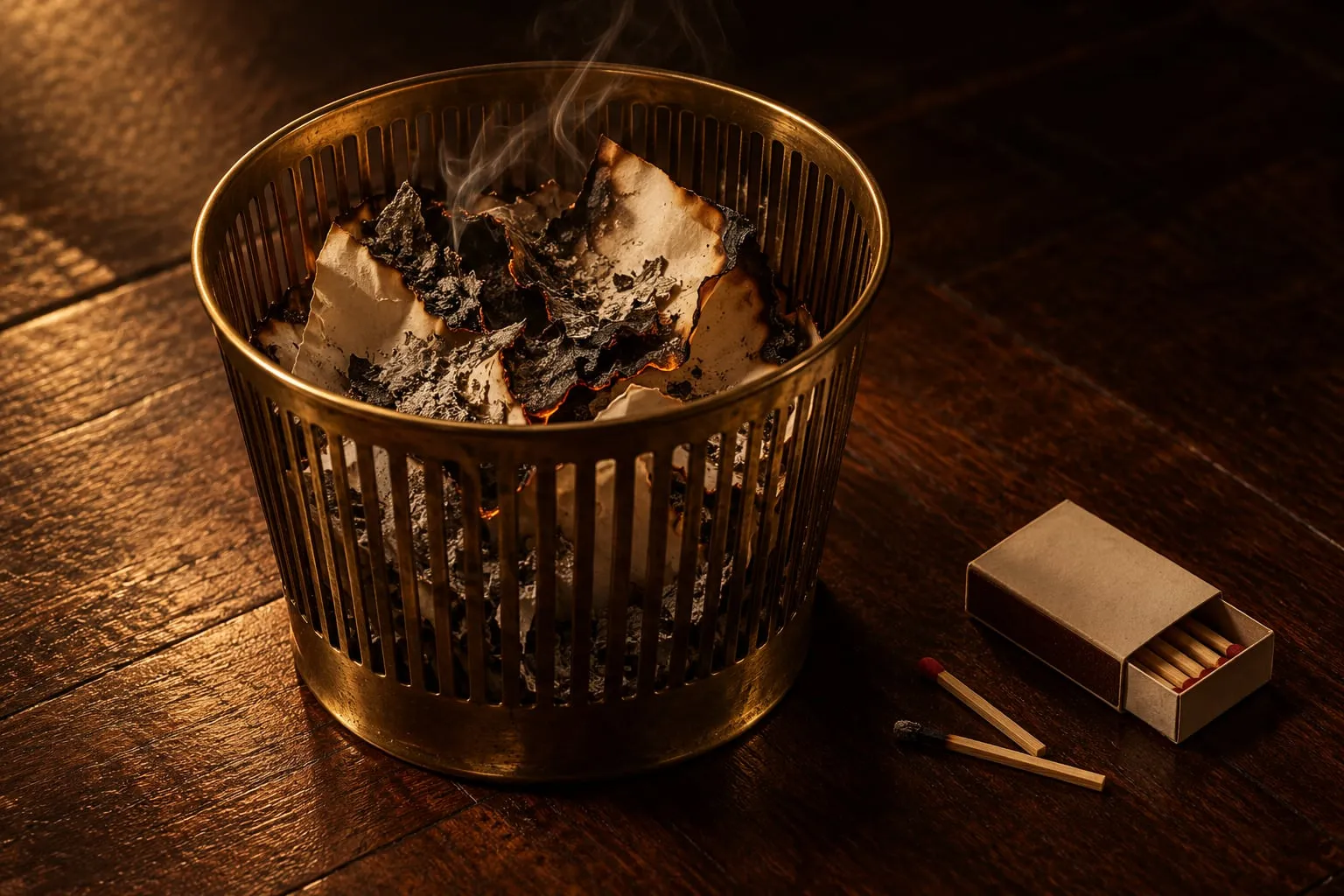
The Don wrote down the three Monday numbers: how many kilograms of linen had come in, how many items had come back with a complaint, how much was left in the Family’s funds. Everything else he remembered or asked about. He burned the drafts of his letters in the kitchen stove. Not because there was anything secret in them. But because paper, he told me once, has one property: it lives longer than you remember what you wrote on it.
The Bottom Line
Meet when you can’t do without it, and check who’ll be there and why before you go.
And from the other side, read other people’s meetings and papers. A meeting’s rules tell you what it’s afraid of. A code tells you there’s something to hide. A man who writes everything down may one day show his notes to someone other than you. And a man who writes nothing down may one day say he never promised anything.