
Feeling Before Figures
In Florida a father and son took it on themselves to sell cocaine to Donnie and his partner, Tony Rossi. They promised it was about eighty per cent pure and left a sample. The sample went to the sheriff’s lab. The cocaine, Pistone writes, turned out to be fifteen per cent pure at best. At the next meeting the sellers insisted they’d mixed up the bags. Then they moved on to the high style: one of them swore with all his heart that he’d never expected anything like it.
Donnie’s answer, in Pistone’s account, was that to do business you think with your head, not your heart, and you keep an eye on the pockets. There was no deal.
A good line. About the pockets, it’s right all the way. About the heart, only halfway. Let me explain.
The Man Without a Heart
The American neurologist Antonio Damasio described a patient he called Elliot. Elliot had a tumour removed from the front of his brain. His memory, speech and arithmetic stayed with him. He passed intelligence tests better than most. And his life went off the rails.
Elliot could spend half a day sorting papers and still not decide whether to arrange them by date or by importance. Choosing a restaurant became a board meeting. The menu, the seating, the noise, the prices—and no decision. Then came a dubious partner, a lost job, a divorce. He talked about his troubles evenly, as if they were somebody else’s weather.
Damasio concluded that the operation had cut Elliot off from his feelings. Without them, he guessed, reason doesn’t decide. It just shuffles things, like a bookkeeper nobody has told which column matters more.
Later Damasio’s colleagues, led by Antoine Bechara, ran an experiment with cards. People drew cards from four decks. Two decks gave big wins and even bigger losses. The other two paid modestly but came out ahead in the end. In 1997 they reported that even before a player could explain what was wrong with the bad decks, his palms were sweating in front of them, and his hand was drifting more and more often to the good ones. They read this to mean that the body does the sums faster than the head. The reading was challenged. In 2004 Tiago Maia and James McClelland questioned the players in more detail, and it turned out people knew more about the decks than the first experimenters had thought. Which comes first, body or head, is still being argued. What’s left is something else. People whose brains had been damaged the way Elliot’s was didn’t sweat. They kept drawing from the bad decks, even when they already knew the decks were bad.
So it seems Donnie got one word wrong. Without feeling, deciding is hard; Elliot is the proof. Which of the two arrives first, let the scientists settle. It’s enough for me that you need both. The heart says “that way”. The head checks whether there’s a floor there.
A Heart Without a Memory
The trouble is, the heart has a short memory for losses. For a long time Pistone hung around with a Brooklyn crew who talked about money from morning to night. An ordinary person, he remarks, couldn’t think about money that often. Half their schemes came to nothing, or to prison. But they drew no lessons from it, Pistone writes: the failures were quickly forgotten, and new schemes were dreamed up, each more reckless than the last.
The crew wasn’t stupid. It just didn’t keep a notebook. Every morning hope started with a clean sheet, and every new little scheme got sold all over again.
There’s a darker edge too. Giovanni Brusca kept a boy, the son of a turncoat, locked up for twenty-six months. He gave the order to kill him when the boy was fourteen. When he was already cooperating with the investigators, he put it roughly like this: at that moment he simply didn’t have time to think. He’d had twenty-six months. As an excuse it’s worthless. But as a description, remember it. The decision came before the thought, and the thought turned up afterwards to explain it. That happens often enough to far more peaceable people too.
The Button
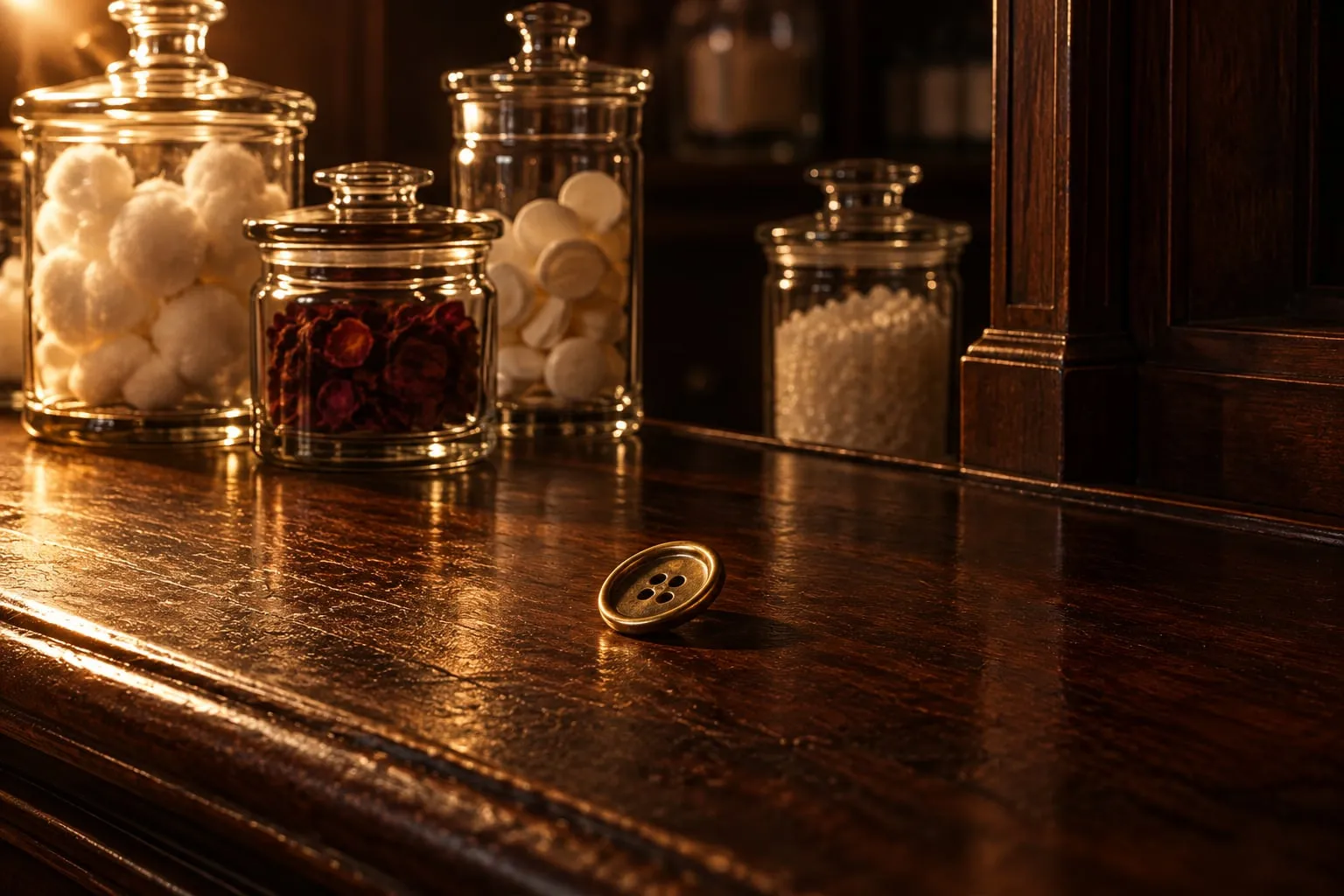
We had a client, the chemist’s wife, who had brought us her husband’s shirts for ten years. One day she got a jacket back with someone else’s button on it. A trifle. The button was replaced in five minutes, no charge, with an apology. She went over to the competition.
A year later she came back. I, young and clever, asked whether they’d been cheaper. She didn’t even understand the question. She didn’t remember the price. She remembered how the other place had lost the collar of her husband’s best shirt and spent half an hour proving she’d brought it in without one. “With you it was a button,” she said. “With them it was my fault.”
The Don explained to me afterwards that she hadn’t been counting money, she’d been counting grievances. One grievance with us against one with them, and at least we had admitted ours. The head would find the arguments later: they get stains out better here, and it’s a shorter walk. But it wasn’t the head that decided.
The Bottom Line
If you want to do it honestly, give the man a real feeling and at the same time give his head something to check. A deadline, a sample, a guarantee, a name he can come to with a complaint. Feeling without checking is the Brooklyn crew. Checking without feeling is Elliot over the menu. You need both.
Now about how it’s done to you. You’re told the offer runs out today and can’t be cancelled later. That means someone needs you not to have time to consult anyone. The second sign is a seller caught in a discrepancy who suddenly switches from figures to oaths. There’s one answer, the Florida one. The sample goes to the lab. Your eyes go to the pockets. And a decision that can’t be undone waits until tomorrow.