
How to Show the Goods
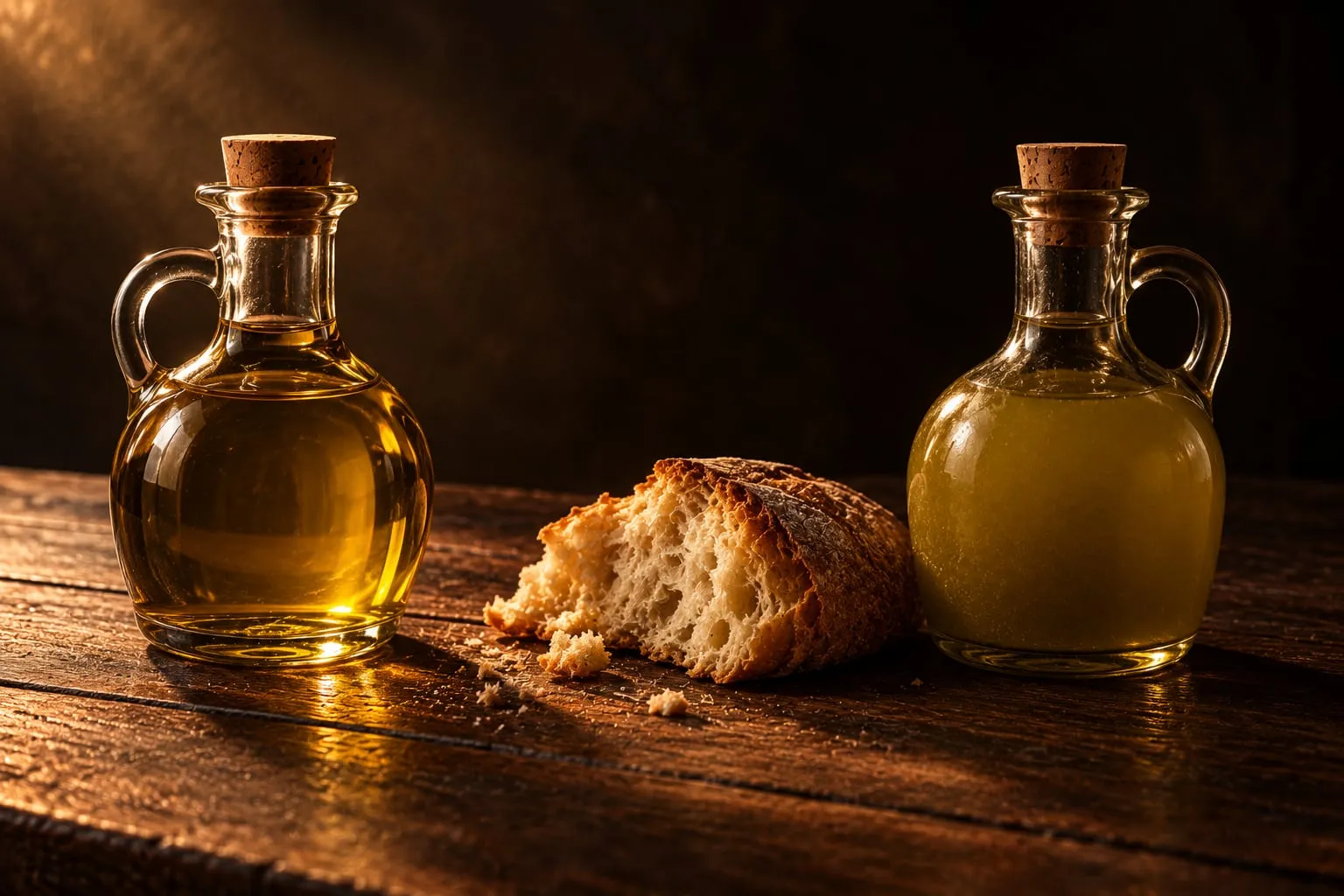
Every November, when the new season’s oil came in, the Don held an evening for young cooks in the back room. He sold nothing. He put tins, bread and a frying pan on the table. He showed them at what heat the oil starts to smoke and where to keep it so it doesn’t go rancid. The cooks tasted, argued, fried. He answered questions, and that was all.
One year, next to the new tins, he set out last year’s, from his own warehouse. He let them taste both. Last year’s had already turned musty, and the cooks smelled it at once. I decided then that the Don had lost his mind: showing a buyer your own stale stock. The Don shrugged. A man who has seen once that you don’t hide the bad will believe you about the good.
Later those cooks moved on to new kitchens and pulled the Family along behind them. Nobody had sold them anything. They’d been allowed to see for themselves. The Don used to say: “A cook doesn’t need my opinion of the oil. A cook needs a frying pan.”
That’s all there is to showing. A man checks your words. What he has seen himself he doesn’t check. He knows it.
Patsy’s Glass Stone
The crew Pistone ran with cleaned out a rich lady’s house. The next morning he came into the club and found Patsy, one of the burglars, there. Patsy was waving a huge diamond about. Three carats, at least. Everyone was celebrating.
Before the operation, at the FBI’s request, a big jewellery firm had put Pistone through a two-week course in gemmology. He looked at the stone and told Patsy, in front of everyone, not to get excited: it was a fake, costume jewellery. Patsy boiled over. Donnie suggested showing the stone to a jeweller he knew. Half an hour later Patsy came back, in Pistone’s words, with his tail between his legs.
Pistone admits honestly that he was taking a chance. The stone was too big to be lying around a house unguarded, and the colour looked wrong. The rest was instinct. After that, over dinners, they called him “Don the Jeweller” and shouted that to him every diamond was a fake.
Look at what he showed. Not the stone. Knowledge. And he handed it to an outsider, the jeweller, to check. Your own word can be argued with. The word of a third party, who has no reason to play along with you, is hard to argue with.
Two Out of Sixty Pairs
Vinnie the fence offered Donnie a case of perfume. Donnie bragged back about a score of his own: sixty pairs of watches and some turquoise. And he showed two samples: gold digital watches with red faces, the new thing back then. Vinnie lit up, Pistone recalls: he’d take them to Brooklyn, show them to Jilly, and if Jilly was interested he’d take more. Three weeks later Vinnie called and asked for another fifteen pairs.
Two samples did what a story about sixty never would have. The man carried the thing off in his hand and went on to show it to the next man. A good sample sells itself—and not just to the man you showed it to, but to the next one.
Now the other side of it. There was no score. Pistone had bought the watches in a hurry from a wholesale market off Canal Street, so he’d have something to show. The sample was real. The story around it was a cover story.
Who to Show It To
Lefty taught the agent Tony Conte how to place vending machines in Milwaukee bars. Don’t dress up the office: as Pistone tells it, throw down a rug, put in a desk with a phone, buy a beeper. Go round the bars and work on the bartenders: promise each one a Christmas present the size of a week’s wages and fifty bucks on top every week. Offer the owner a fifty-fifty partnership, so he has a piece of it. And don’t hang around: one drink at most, Lefty told him, then go.
Forget for a moment what kind of business this is. About the machine itself, Lefty didn’t say a word. To the bartender, whose nose the machine will be sitting under, he offered his money. To the owner, his cut. Goods aren’t shown in general. They’re shown to the man who decides, and in his currency.
When the Whole Room Is Listening
When you have to show it to a lot of people, the words multiply, and that’s the first trouble. The American psychologist Richard Mayer spent years testing how people take in pictures together with speech. His finding is awkward for slide lovers. If the screen says the same thing you’re saying out loud, people understand worse, not better. The eyes read, the ears listen, and they jostle each other. The Don would have put it more simply: you put the frying pan on the table, not the recipe. If you want them to remember, show one thing and let them look at it for a good long while.
The second trouble is nerves. In 2014 Alison Brooks of Harvard Business School had people tell themselves one of two things before speaking: “I am calm” or “I am excited.” Those who said the second came across as more persuasive. Calming a body that’s already wound up is next to impossible. Calling the same jitters excitement takes a second.
The Bottom Line
Honest showing puts the thing in a man’s hands and lets him check it. Show what you know, not just what you brought. If they don’t believe you, call in someone who has no reason to play along with you. And talk to the man who decides, about what’s in it for him.
And when it’s you being shown, remember Vinnie’s watches. The sample in your hand can be genuine and the story around it made up. Check the batch, not the sample. And remember Patsy: the most confident face in the room sometimes belongs to the man holding the glass.