
A Soldier’s Pension
In 1977, at the entrance to the Toyland club on Hester Street, Joe Pistone was stopped by Jimmy “Fort Lee” Capasso, a Bonanno family capo. He was about fifty and, as Pistone puts it, always talked good sense. Capasso took him aside. And gave him a piece of advice that Pistone recounts almost word for word.
In substance, it went something like this. Donnie, he said, you seem to have your head screwed on, so listen. In our line of work you get old fast and nobody needs you any more. First you make a pile of money, then you hit fifty or sixty and you’ve got nothing: guys like us don’t know how to save, and you can’t make new money any more, you’ve lost the hustle. My advice: find a reliable friend and from every job give him a little to hold for you. And make a deal that he won’t give you a cent until you’ve retired. Make it an ironclad deal, though, or the very next day you’ll be running to him for a grand or two. Hold out till you’re old and you’ll live in clover and not die broke like a lot of our guys.
Pistone adds that this was 1977, and Jimmy had already invented the individual retirement account for people in the Mafia.
Tie Your Own Hands
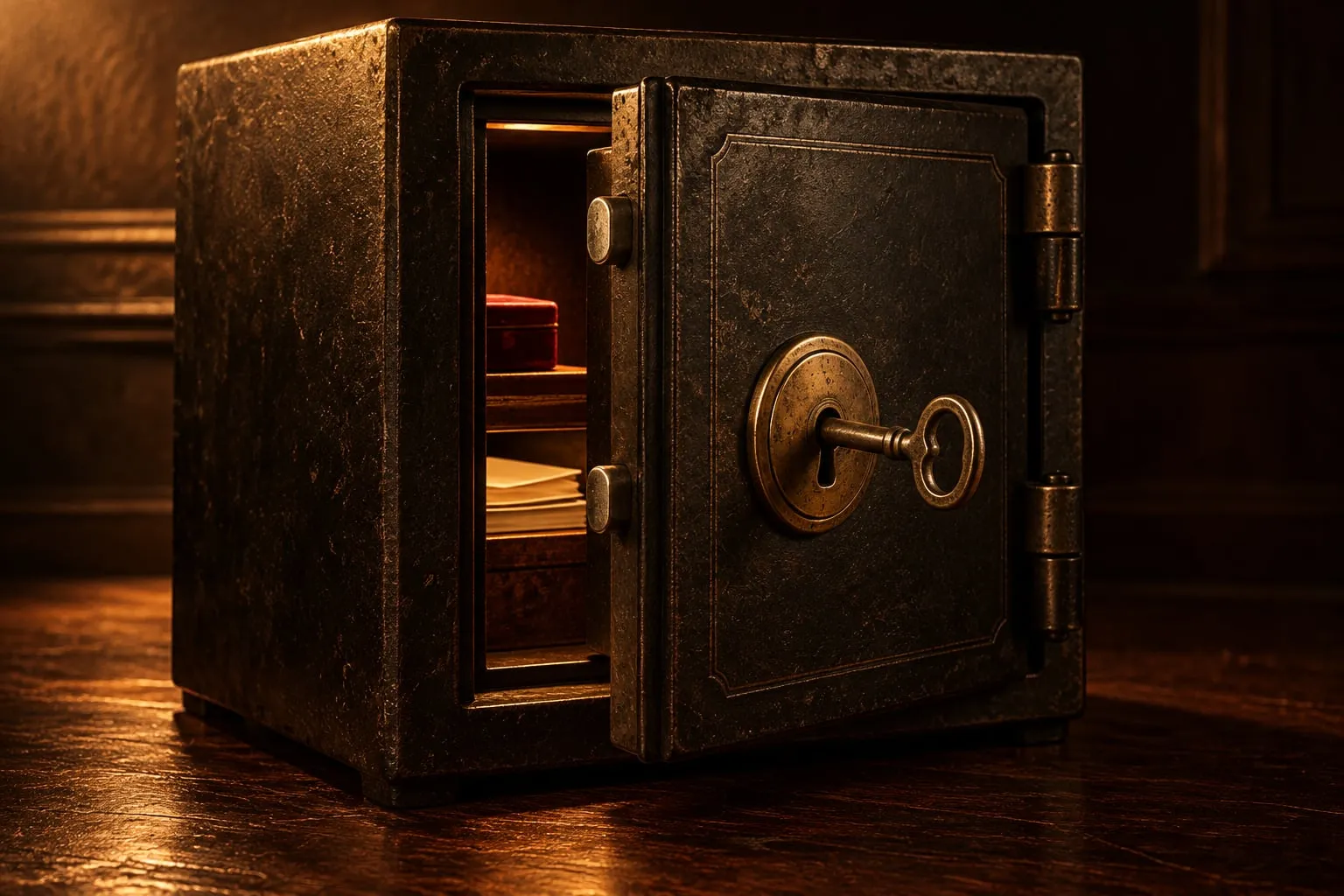
Look at what Capasso came up with. Not returns. Not clever investments. A lock: the money can’t be taken out before its time. The lock doesn’t make it a pension yet. It won’t tell you whether the money will be enough, or for how many years. But without a lock, nothing usually survives to old age.
If money is close at hand, people spend it. Not because they’re stupid. Today’s need always seems more important than tomorrow’s old age. Capasso knew that and suggested tying your own hands: give the money to someone who won’t give it back, even if you beg.
Legitimate pensions work the same way. In 1978 America got a retirement account named after a section of the tax code: “401(k)”. Whoever pays in pays less tax. Whoever takes money out before fifty-nine and a half usually pays a penalty on top of the tax, though the law makes exceptions for hardship. The state, in effect, plays Capasso’s “reliable friend”, only more gently: it gives you a break as long as you don’t touch the money, and punishes you if you do.
If Your Friend Isn’t Reliable
Where’s the weak spot in Capasso’s plan? In the word “reliable”. What if the friend spends your money? Or dies? Or goes to prison?
The American Mafia once showed for itself what happens when pension money falls into unreliable hands. From the 1950s to the 1970s, truck drivers paid into a huge pot for their old age—their union’s Central States Pension Fund. And the fund, through its administrator Allen Dorfman, lent money to people building and buying casinos in Las Vegas. According to the Mob Museum in Las Vegas, the money went into the Hacienda, the Fremont, the Desert Inn, Caesars Palace, the Stardust and others. Many of the loans weren’t repaid on time. Or weren’t repaid at all. And from the casinos themselves, by the federal authorities’ reckoning, the Mafia carried off about three hundred million dollars in cash, bypassing the counting room and the taxman. Dorfman helped. He was shot dead in 1983, before the court could pass sentence. In the film Casino—fiction, mind you—the character based on him was played by the comedian Alan King.
A pension fund is the longest and quietest cash box in the world. The money sits there for decades, and its owners rarely check where it is. That’s why the manager is pulled harder than anyone to invest it with “friends”. He’s pulled—and quite often he does. Afterwards the drivers’ union was kept under court supervision for more than twenty-five years.
The Pension That Wasn’t There
Ordinary companies knew how to leave people without a pension too. No shooting required.
In 1963 the Studebaker car plant in the city of South Bend closed. The company had set aside so little for its pension plan that it couldn’t pay everyone. Those over sixty—three thousand six hundred of them—were paid in full. Those aged forty to fifty-nine with ten years’ service—four thousand people—got a lump sum of about fifteen per cent of what they were owed. The remaining two thousand nine hundred got nothing. Not a cent.
Eleven years later America passed a law that required pension plan managers to act in the workers’ interests, created a government corporation to insure the pensions a company had promised in case the employer went bankrupt, and barred a pension plan from holding more than ten per cent of its money in the employer’s own securities. That last rule was written with Studebaker in mind. But it didn’t apply to workers’ individual retirement accounts, and at Enron, as we’ve seen, more than half of those savings were still sitting in the company’s own shares.
Notice that there are two kinds of pension here, and they’re different. At Studebaker the company promised: you’ll get so much until the end of your life. If the money was badly invested, or you lived to ninety, the company paid—for as long as it was alive itself. Since the law, such promises are also backed by the government corporation, though not for any amount. On an individual account like a 401(k), nobody promises anything. You save for yourself, and it’s on you if the market falls or you live too long. The government corporation doesn’t insure accounts like that. Capasso, by the way, invented the second kind.
A Fund You Can Walk Away From
And the last thing that was invented, and that many people’s pensions can’t do without today, at least in America: the mutual fund. In 1924 the first fund in America opened in Boston from which any investor could take out his share at any moment—at whatever the assets were worth that day. Before, someone with little money could hardly spread it across a hundred different companies. Now even someone on small wages could buy a slice of the whole market. And sell it when he needed to.
Mutual funds and retirement accounts together did what Capasso advised. Only lawfully, under supervision, and with a court behind them. Now an ordinary person can put a little aside from every pay packet, not hand it all to one “reliable friend”, and face old age with better odds than Capasso’s guys had. Odds, not a guarantee. How much will be there depends on how much you paid in, how much they charged for managing it, how the market behaved and how long you live.
The Pressers’ Passbooks
When Don Vincenzo was getting old, he once saw one of his first pressers at a funeral. She had left us twenty years before. She had walked all the way across town. She couldn’t afford the tram. The pension the state paid her was a pittance.
A week later the Don opened a separate bank account in the name of every presser and every driver. Every year before Christmas he put in as much as the person earned in two weeks. Withdrawals were allowed only when the person turned sixty, or when they left after working for us for twenty years. Signora Lucia kept the passbooks in the safe.
One presser, Maria, came five years later asking for her money early: her son was getting married. The Don said no. Then he gave her the money for the wedding out of his own pocket, as a loan, without interest. “Leave the passbook alone,” he said. “A wedding happens once in a lifetime, but old age goes on a long time.” Maria paid it all back within a year. When she retired, the passbook together with her state pension kept her to the end.
The Bottom Line
A lock on your money isn’t a pension yet, but without a lock there’s usually no pension at all. Next, ask who’s promising you a payout, and who pays if the market falls or you live longer than you planned: the company, an insurer or you yourself.